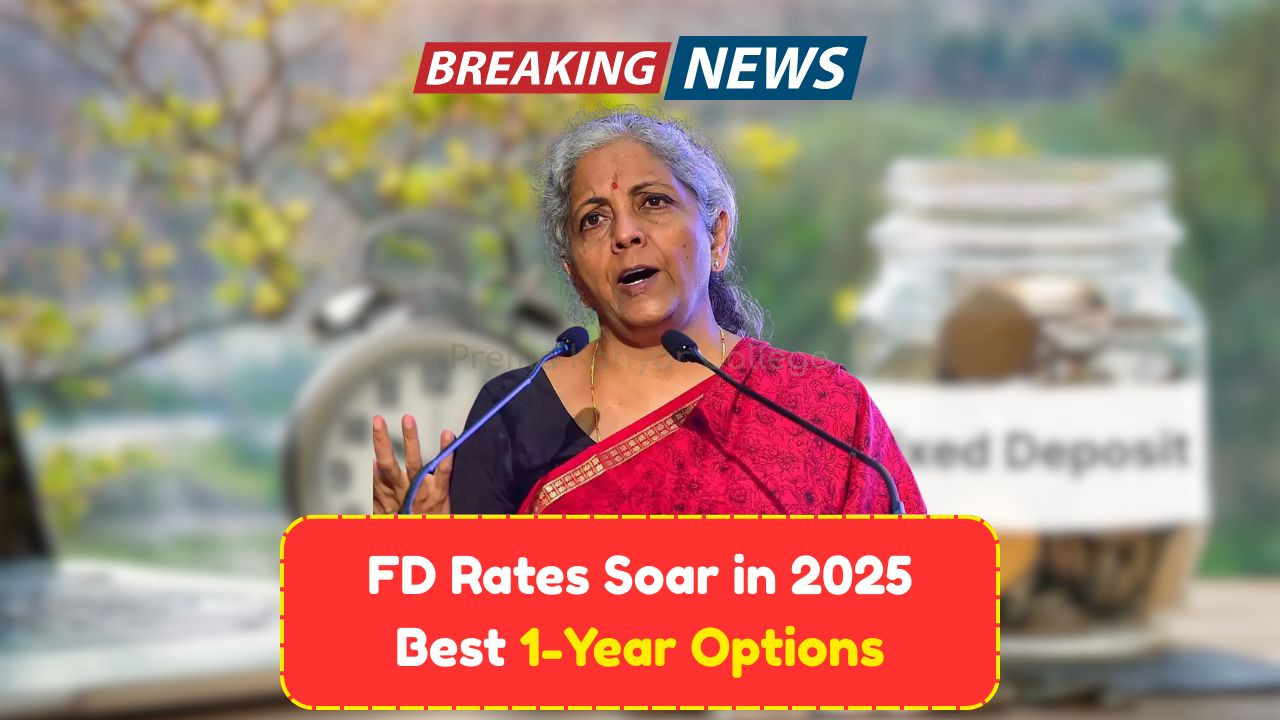
Unlock Up to 9.60% Interest: As the year 2025 approaches, many are looking to make the most of their savings, and one of the most secure ways to do this is through Fixed Deposits (FDs). Current trends show an enticing opportunity for savers, with banks offering up to a 9.60% interest rate on 1-year FDs. This makes it a prime time to lock in your savings and enjoy substantial returns.
Best 1-Year FD Rates in 2025
In 2025, the financial landscape in India is promising for those looking to invest in fixed deposits. With several banks competing to offer the best rates, it’s important to know which institutions provide the most lucrative options.
 प्रॉपर्टी खरीदने-बेचने वालों के लिए जरूरी खबर – 2025 में रजिस्ट्री के नियमों में 4 बड़े बदलाव
Here are some of the top banks offering the highest interest rates on 1-year FDs in 2025:

- Bank of India: 9.60%
- Punjab National Bank: 9.50%
- Canara Bank: 9.45%
- State Bank of India: 9.40%
- HDFC Bank: 9.35%
Comparing Fixed Deposit Rates
While choosing a bank for your FD, it’s essential to compare not just the interest rates, but also other factors such as flexibility, customer service, and additional charges. Let’s take a closer look at what to consider.
Here is a quick comparison of interest rates and features:
FD Rate Comparison Table
| Bank | Interest Rate | Minimum Deposit | Additional Benefits | Premature Withdrawal | Tenure | Compounding Frequency |
|---|---|---|---|---|---|---|
| Bank of India | 9.60% | ₹10,000 | Loyalty Points | Allowed with penalty | 1 Year | Quarterly |
| Punjab National Bank | 9.50% | ₹20,000 | Free Insurance | Allowed with penalty | 1 Year | Monthly |
| Canara Bank | 9.45% | ₹15,000 | Gift Vouchers | Not Allowed | 1 Year | Bi-Annually |
| State Bank of India | 9.40% | ₹25,000 | Priority Service | Allowed with penalty | 1 Year | Annually |
| HDFC Bank | 9.35% | ₹30,000 | Discount Offers | Allowed with penalty | 1 Year | Quarterly |
How to Choose the Right FD
Choosing the right fixed deposit is a critical decision. While high interest rates are enticing, they are not the sole factor to consider. Here are some tips for making the best choice:
Factors to Consider When Choosing an FD
| Factor | Importance | Questions to Ask | Considerations |
|---|---|---|---|
| Interest Rate | High | Is it the highest available? | Balance with other features |
| Bank Reputation | Medium | Is the bank reliable? | Check bank reviews |
| Premature Withdrawal | Medium | Are there penalties? | Plan for emergencies |
| Additional Benefits | Low | What extras are offered? | Consider if useful |
| Minimum Deposit | Medium | Can you afford it? | Ensure affordability |
Advantages of Investing in 1-Year FDs
Investing in 1-year fixed deposits has several advantages that appeal to both conservative and strategic investors. Here’s why they could be a smart investment choice:
- High Returns: With rates up to 9.60%, your money grows faster.
- Low Risk: FDs are one of the safest investment options.
- Flexibility: Short tenure allows for reinvestment or withdrawal.
- Tax Benefits: Certain schemes offer tax deductions.
- Financial Planning: Helps in achieving short-term financial goals.
Things to Keep in Mind
While 1-year FDs offer numerous benefits, consider the following before investing:

- Liquidity Needs: Ensure you won’t need the funds during the tenure.
- Inflation Impact: Compare the real return against inflation rates.
- Tax Implications: Interest earned may be taxable.
Maximizing Your FD Returns
- Compare rates across multiple banks before finalizing.
- Consider splitting deposits across banks to maximize returns.
- Reinvest upon maturity to take advantage of compounding.
Future of FD Interest Rates
| Year | Expected Trend | Interest Rate Range | Economic Indicators |
|---|---|---|---|
| 2025 | Stable | 9.30% – 9.60% | GDP Growth |
| 2026 | Moderate Increase | 9.50% – 9.80% | Inflation Rate |
| 2027 | Slight Decrease | 9.20% – 9.50% | Repo Rate |
FAQs on 1-Year FD Rates in 2025
What is the highest FD rate in 2025?
The highest FD rate in 2025 is 9.60%, offered by Bank of India.
Are there any tax benefits with 1-year FDs?
Yes, some FDs offer tax benefits under certain schemes.
Can I withdraw my FD before maturity?
Premature withdrawal is possible but usually incurs a penalty.
How often is interest compounded in FDs?
Interest compounding can be monthly, quarterly, bi-annually, or annually, depending on the bank.
 फ्री राशन पाने वालों के लिए बड़ा अलर्ट – 2025 के नए नियमों के बाद इन लोगों का नाम लिस्ट से हटेगा
Should I invest all my savings in a 1-year FD?
It’s advisable to diversify your investments to balance risk and returns.